You’ve probably seen the typical minimalist capsule wardrobe online. It has plain tees, neutral colored pants, and a few sensible accessories. Boring!! If it sounds like a snooze fest to you, too, don’t worry. A minimalist wardrobe doesn’t have to put you to sleep.
A minimalist wardrobe just means that you are dressing with a limited amount of clothing, not with a limited amount of fun. Here’s how you can live the minimalist lifestyle while still embracing your own style.
Step out of the black box
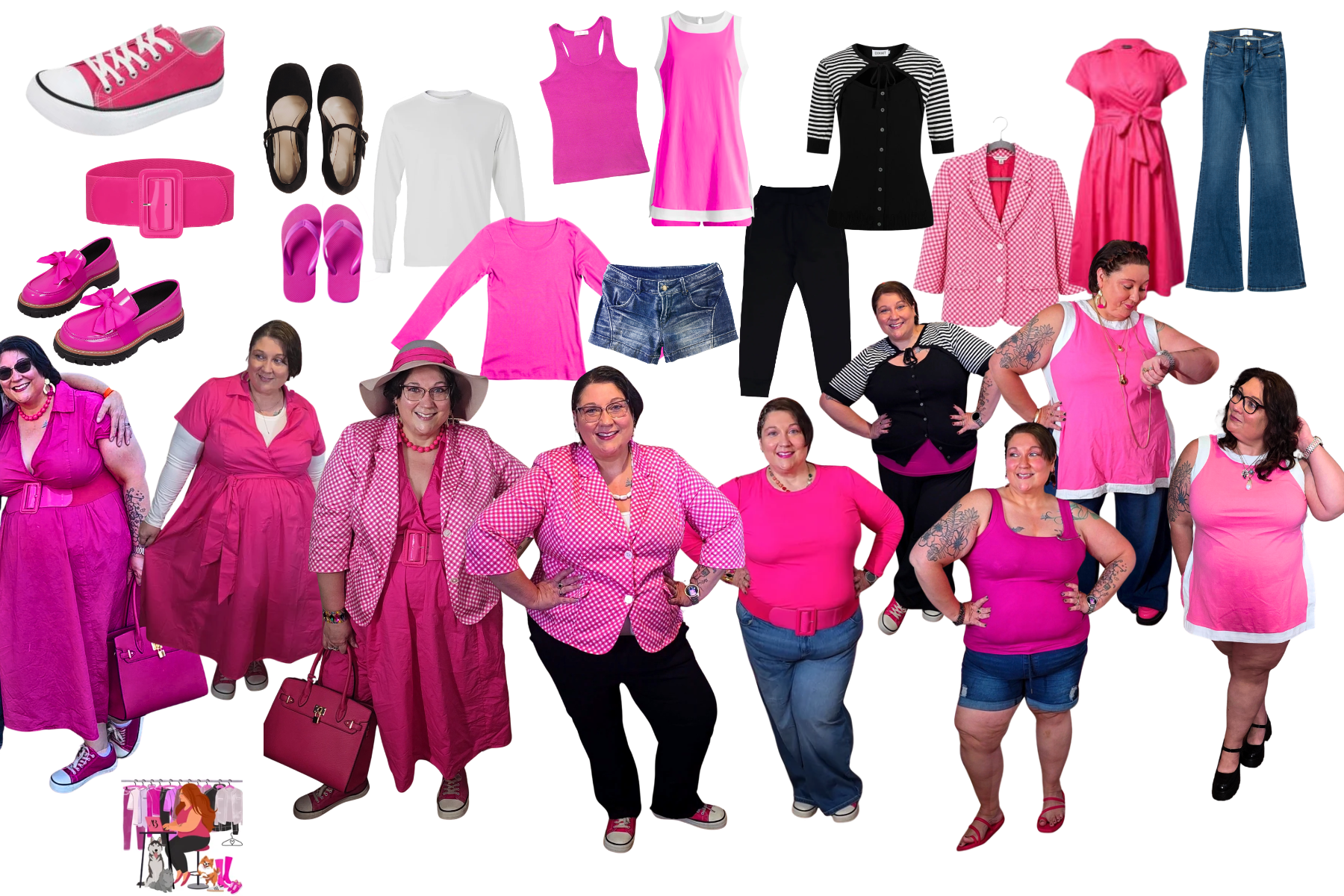
Pink capsule collection
If you think your wardrobe needs to be a sea of black so everything goes together, think again. There's a wide range of colors that work well with a large number of other colors.
Some versatile options include:
Brown, including tan, taupe, camel, and chocolate
Navy
Burgundy
White, including pure white, cream, ivory, and eggshell
Gray
Even these aren't requirements. Your wardrobe doesn't need to be built around traditional neutrals at all. You're much more likely to love your minimalist wardrobe if it revolves around colors you love, not just “sensible” ones. The trick is to make sure that whatever colors you pick work together so you can make as many outfits as possible from fewer pieces.
For example, if you love pink, make pink your main color and build everything you buy around whether it will go with pink. You might combine pink with burgundy, chocolate brown, red, orange, gray, navy, olive green, or Kelly green.
You could also pick two or three colors that work together and build your wardrobe around them. Eventually, that color combination may become part of your signature look.
You don't need to limit yourself to neutral-plus-neutral combinations. There are plenty of ways to create a cohesive wardrobe with brighter, richer, or more unusual colors.
Here are some combinations to consider:
Black + white
Black + camel
Black + red
Black + hot pink
Black + cobalt blue
Black + emerald green
White + navy
White + camel
White + olive green
White + chocolate brown
White + burgundy
Cream + chocolate brown
Cream + olive green
Cream + burgundy
Cream + rust
Cream + navy
Beige + black
Beige + burgundy
Beige + forest green
Beige + powder blue
Camel + navy
Camel + burgundy
Camel + forest green
Camel + denim blue
Gray + pink
Gray + burgundy
Gray + navy
Gray + lavender
Gray + cobalt blue
Navy + red
Navy + mustard yellow
Navy + pink
Navy + Kelly green
Navy + orange
Chocolate brown + powder blue
Chocolate brown + pink
Chocolate brown + turquoise
Chocolate brown + orange
Chocolate brown + burgundy
Olive green + pink
Olive green + rust
Olive green + burgundy
Olive green + mustard yellow
Olive green + lavender
Forest green + burgundy
Forest green + camel
Forest green + blush pink
Burgundy + powder blue
Burgundy + blush pink
Burgundy + mustard yellow
Burgundy + teal
Rust + teal
Rust + navy
Rust + cream
Terracotta + sage green
Terracotta + turquoise
Mustard yellow + burgundy
Mustard yellow + navy
Mustard yellow + plum
Mustard yellow + teal
Cobalt blue + orange
Cobalt blue + hot pink
Cobalt blue + Kelly green
Cobalt blue + red
Royal blue + orange
Royal blue + fuchsia
Sky blue + red
Powder blue + burgundy
Powder blue + chocolate brown
Powder blue + cherry red
Teal + coral
Teal + mustard yellow
Teal + rust
Turquoise + red
Turquoise + coral
Emerald green + hot pink
Emerald green + purple
Emerald green + red
Kelly green + pink
Kelly green + cobalt blue
Sage green + lavender
Sage green + dusty pink
Sage green + terracotta
Pink + red
Pink + burgundy
Pink + orange
Pink + Kelly green
Pink + chocolate brown
Hot pink + orange
Hot pink + red
Hot pink + cobalt blue
Hot pink + emerald green
Blush pink + burgundy
Blush pink + olive green
Coral + turquoise
Coral + navy
Coral + cobalt blue
Red + purple
Red + camel
Red + powder blue
Orange + cobalt blue
Orange + purple
Orange + navy
Yellow + lavender
Yellow + cobalt blue
Yellow + purple
Yellow + denim blue
Lavender + olive green
Lavender + chocolate brown
Purple + mustard yellow
Purple + emerald green
You don't need to use this entire list when planning a minimalist wardrobe. In fact, don't. Pick a handful of combinations you love and use them as a guide when you're deciding what belongs in your closet.
Make your basics less basic
Despite the name, basics don't need to be boring. A basic is simply something you can wear frequently and combine with lots of other pieces. What that looks like depends on your style.
Instead of plain tees, you could have:
Graphic tees
Striped tees
Polka-dot tops
Ringer tees
Embroidered shirts
Puff-sleeve tops
Ribbed tops
Colorful button-downs
Your go-to pants don't have to be plain black trousers, either. You could wear tuxedo pants with a satin stripe, wide-leg palazzo pants, sailor pants, colorful trousers, or jeans in a silhouette you love.
The question isn't, “Is this boring enough to be a basic?” It's, “Can I wear this often and style it several different ways?”
If the answer is yes, it can earn a place in a minimalist wardrobe.
Let your shoes have some personality
You don't have to fill the bottom of your capsule wardrobe with plain pumps, white sneakers, and loafers unless those are the shoes you genuinely love.
Instead of a sensible pump, you could wear Mary Janes. Instead of a basic sneaker, try one with a bright color, metallic finish, interesting sole, or a little sparkle.
Depending on your personal style, your small shoe collection might include:
Combat boots
Cowboy boots
Platform sneakers
Colorful loafers
Mary Janes
Metallic shoes
Bright sneakers
Patterned flats
Chunky sandals
Statement heels
A distinctive pair of shoes can also do a lot of the styling work for you. A simple dress can look completely different with combat boots than it does with colorful heels.
That makes statement shoes surprisingly useful when you're trying to get more outfits from fewer clothes.
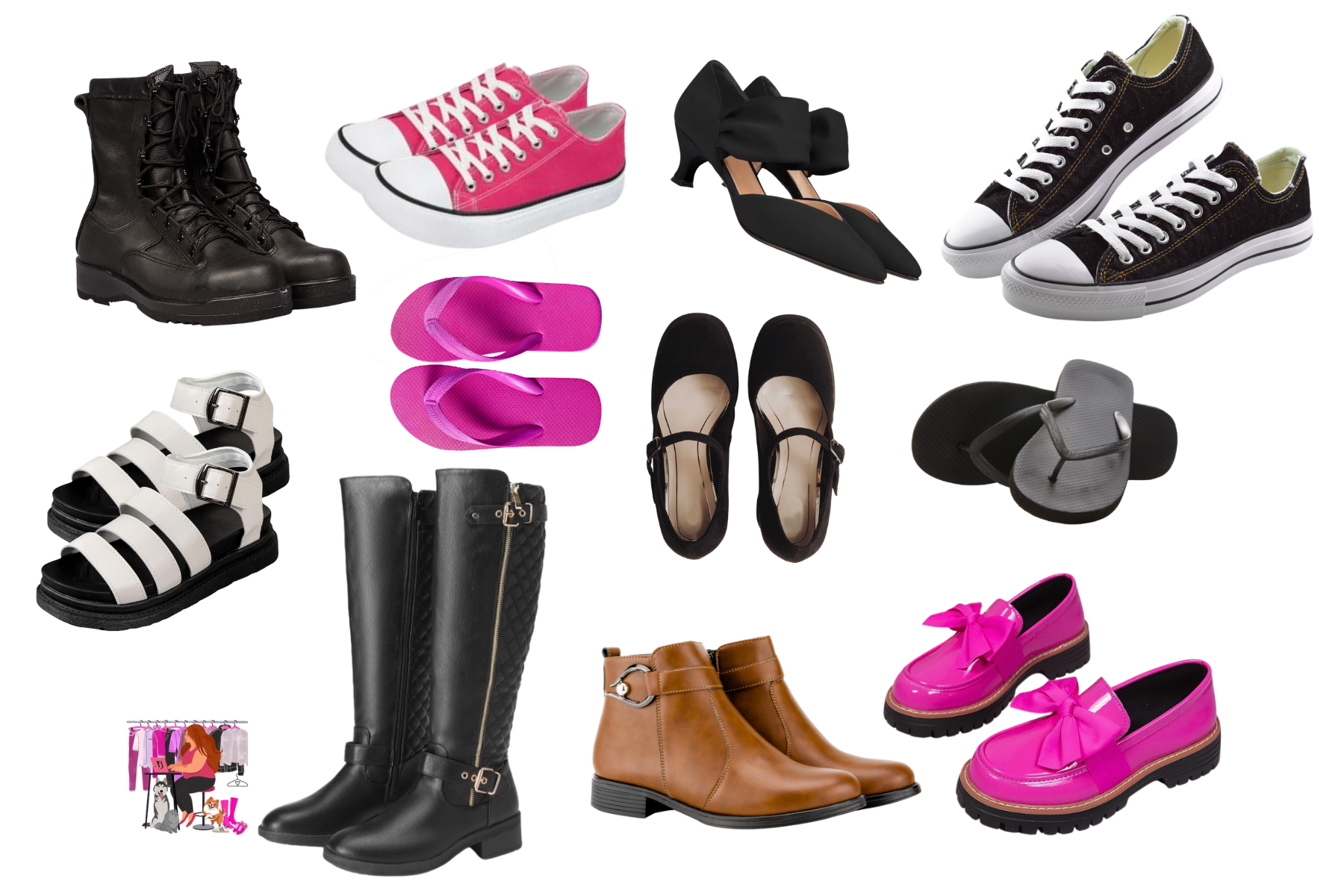
Some of my shoe collection
Go for texture
Another way to make your wardrobe more interesting is by adding texture. A basic can still be a basic even if it has a nice weave or finish.
Look for textures such as:
Silky fabrics
Nubbly yarns
Smooth poplins
Ribbed knits
Bumpy weaves
Velvet
Corduroy
Bouclé
Lace
Crochet
Denim
Faux leather
Suede
Mesh
Satin
Eyelet
Texture becomes especially useful if you prefer a limited color palette. An outfit made entirely of black can look much more interesting when it combines a ribbed knit top, satin skirt, and leather boots.
The colors may be simple, but the outfit isn't.
Don't be afraid of prints

Capsule collection with pattern and texture
Prints don't disqualify something from a minimalist wardrobe. If you love prints, include them. The trick is choosing patterns that work with the rest of your clothes.
You could build your wardrobe around:
Stripes
Polka dots
Florals
Plaid
Checks
Animal prints
Geometric prints
Abstract prints
One strategy is to look at the colors inside the print. If a floral blouse contains burgundy, pink, cream, and olive, and those colors already dominate your closet, that blouse may be surprisingly easy to style.
Prints can also become part of your signature look. If you wear leopard print constantly, for example, you may find it functions almost like a neutral in your wardrobe.
Pick a signature
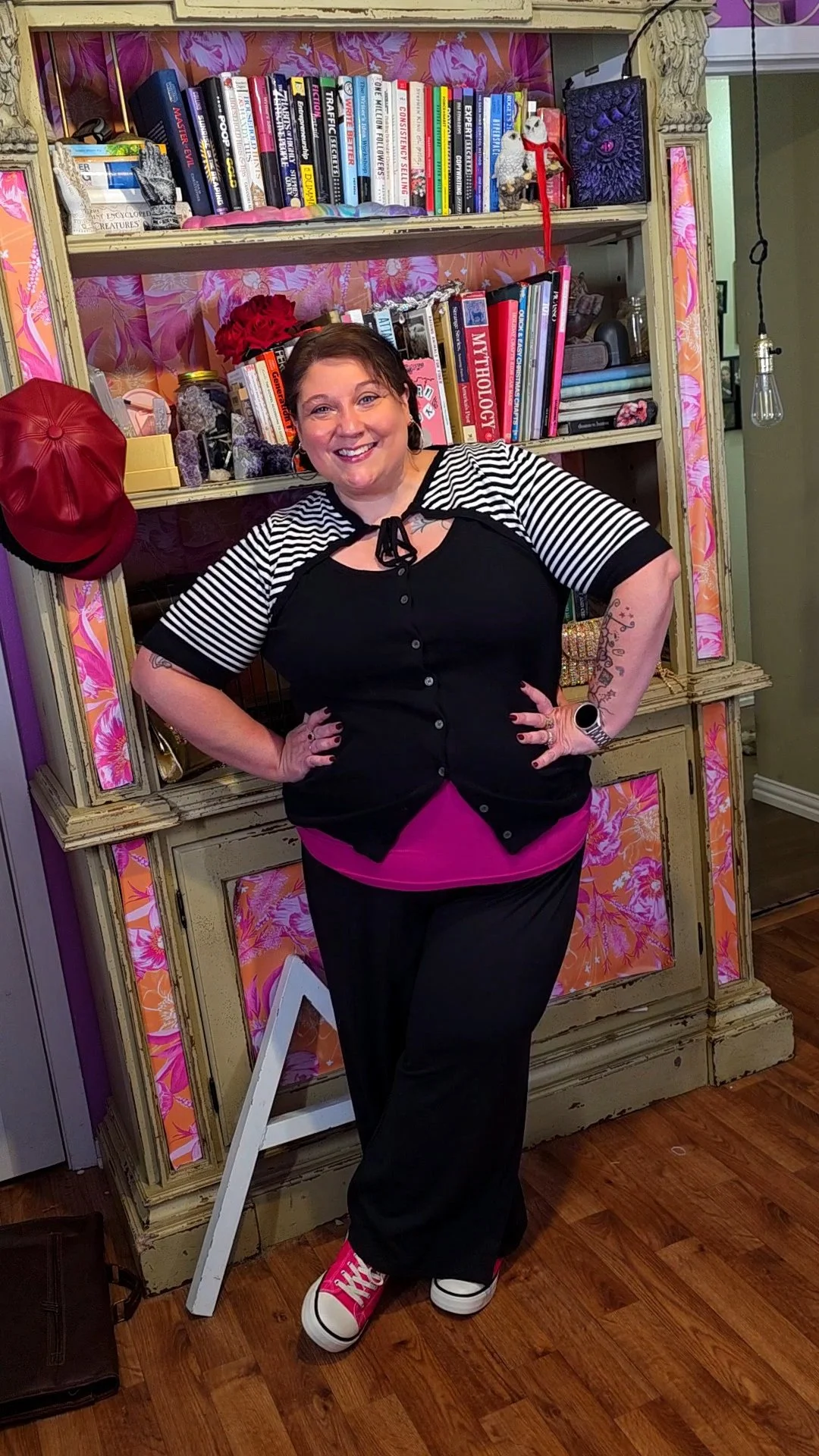
My signature is a bright pink!
A smaller wardrobe gives you an opportunity to develop a recognizable personal style. Choose something you love and repeat it.
Your signature might be:
Brightly colored glasses
Red lipstick
Oversized earrings
Statement necklaces
Scarves
Brooches
Colorful shoes
Leopard print
Stripes
Florals
Wide-leg pants
Full skirts
Dramatic sleeves
A particular color
A favorite color combination
You don't have to wear your signature every day. It simply gives your wardrobe a thread that ties different outfits together.
Capsule Wardrobe FAQs for People Who Find Beige Boring
What is a minimalist capsule wardrobe?
A capsule wardrobe is a small collection of clothes that mix and match into lots of outfits. The limit is on how many pieces you own, and your style stays entirely up to you. Nothing in the minimalist rulebook says you have to dress like a bowl of oatmeal. Minimalism cuts down the quantity, and the fun can stay right where it is.
Does a capsule wardrobe have to be all neutrals?
No. Black, white, gray, navy, burgundy, and shades of brown (tan, taupe, camel, and chocolate) are versatile and pair easily with many other colors. They’re a handy starting point, though, and not a requirement. You’ll probably wear your clothes more if they come in colors you love, so a pink-loving person should feel free to build a closet around pink. The only real rule is that your colors need to work together so you can create plenty of outfits from fewer pieces.
How do I choose colors that work together?
Start with a main color and build around it. If pink is your favorite, look for pieces that pair well with pink, like burgundy, chocolate brown, olive green, navy, or Kelly green. You can also choose two or three colors that complement each other and let them become your signature combination. A few pairings that go beyond the usual neutral-plus-neutral formula:
Navy and mustard yellow
Cobalt blue and orange
Olive green and lavender
Terracotta and sage green
Teal and rust
How many color combinations should I use?
A handful. Pick a few pairings you love and use them as your guide when deciding what stays in your closet. Trying to work in every combination you’ve ever admired will bring back the cluttered closet you were trying to escape.
What counts as a basic?
A basic is any piece you can wear often and style in several ways. Plain tees are one option, but so are striped tees, ringer tees, polka-dot tops, ribbed tops, puff-sleeve tops, embroidered shirts, and colorful button-downs. Pants have the same freedom. Tuxedo pants with a satin stripe, wide-leg palazzo pants, sailor pants, and colorful trousers can all work as everyday staples, as can jeans in a cut you love.
Can I include statement shoes in a capsule wardrobe?
Yes, and they can make your outfits more varied. A small shoe collection might include Mary Janes, combat boots, cowboy boots, platform sneakers, metallic flats, or chunky sandals. Distinctive shoes do a lot of the styling work for you. The same simple dress looks like two different outfits depending on whether you pair it with combat boots or bright heels, which is a nice return on one pair of shoes.
How do I make a limited color palette look more interesting?
Add texture. Fabrics like velvet, corduroy, bouclé, lace, crochet, satin, eyelet, suede, faux leather, and mesh give an outfit depth even when the colors stay simple. An all-black look with a ribbed knit top, a satin skirt, and leather boots has three textures to look at. Each piece can still be a basic, since a nice weave or finish doesn’t take away from how often you’ll wear it.
Can I wear prints in a minimalist wardrobe
You can. Stripes, polka dots (my favorite!), florals, plaids, checks, animal prints, and geometric or abstract designs all have a place. To make prints easy to style, check the colors inside the pattern. A floral blouse with burgundy, pink, cream, and olive in it will go with a closet full of those colors almost automatically. If you wear a print constantly, like leopard, it may end up working like a neutral in your wardrobe.
What is a signature piece, and do I need one?
A signature is something you love and repeat, so your outfits share a common thread. It could be brightly colored glasses, red lipstick, oversized earrings, statement necklaces, scarves, brooches, a favorite color, or a particular silhouette like wide-leg pants or full skirts. You don’t need one, and you certainly don’t have to wear it daily. Many people find that a smaller wardrobe makes a signature easier to develop, since repeated elements start to read as a personal style.
What’s the easiest way to start making my wardrobe more interesting?
Swap one item at a time. Trade a plain tee for a striped one, replace sensible pumps with Mary Janes, or add one textured piece to a mostly solid outfit. Check each new piece against two questions. Can you wear it often? Can you style it several different ways? If both answers are yes, it can stay.